The Choreography of Construction: Poetry in Building Sites
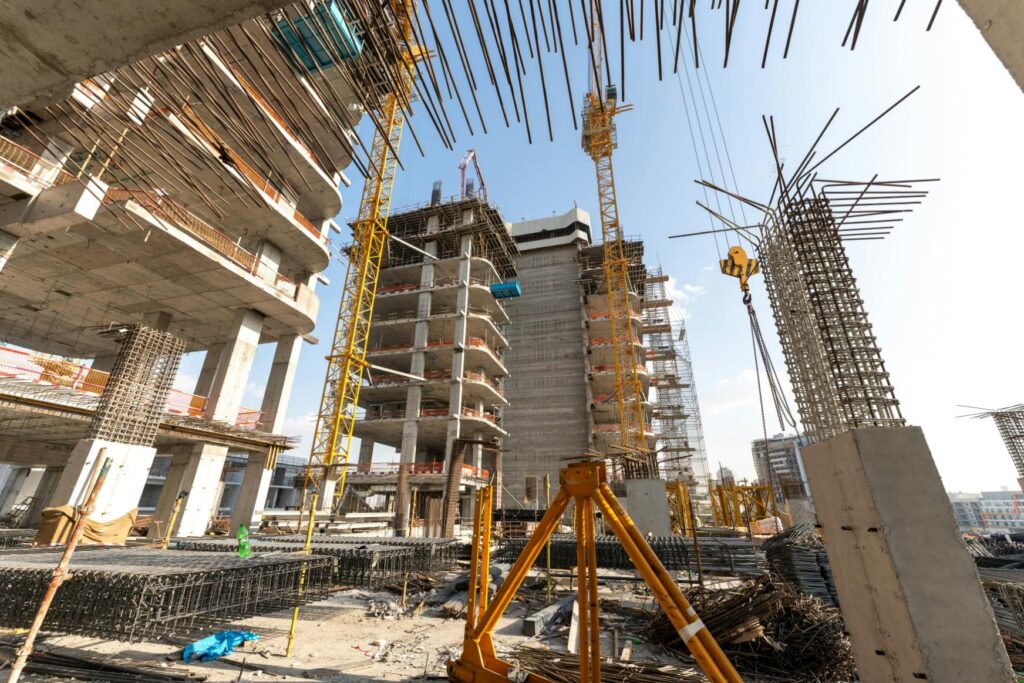
We are taught to see the construction site as a disruption. It is a noisy, chaotic scar on the urban landscape—a place of detours, dust, and delay. But if we adjust our vision and slow our pace, a different reality reveals itself. The construction site is not a wound, but a womb. It is a stage where a slow, deliberate performance is unfolding. This photographic essay is an invitation to look past the chain-link fences and see the construction site for what it is: a space of profound poetry, a complex, unacknowledged choreography of creation.
The Skeleton Stage
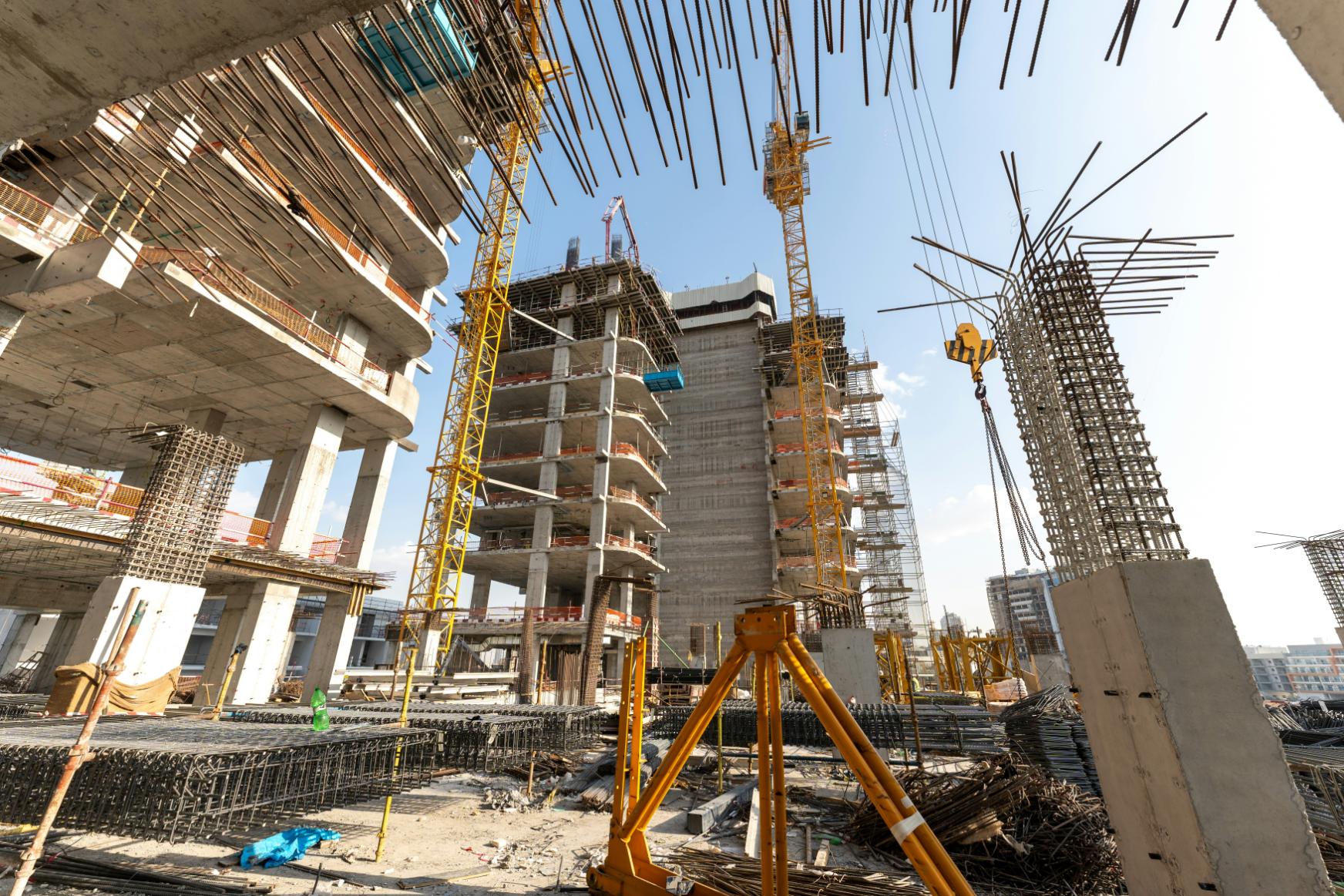
The first act of this performance is the creation of the stage itself. The scaffolding rises, a temporary metal skeleton that encases the void where a building will one day stand. It is a structure of pure potential. To the photographer, this grid of steel and wood is a gift of geometry and line. Light filters through it, creating an ever-changing tapestry of sharp, linear shadows on the ground below. It is a three-dimensional drawing in space, a beautiful, abstract sculpture that exists only for a season. Capturing its stark, elegant forms against the sky is to photograph a building before it is a building, to document its ghostly, skeletal premonition.
The Grace of the Laborer
Upon this stage, the dancers appear. The construction workers move with a practiced, economical grace. Their movements, honed by years of repetition, are a form of non-verbal communication. A welder’s torch releases a sudden, brilliant shower of golden sparks, a fleeting moment of pyrotechnic beauty. A team of ironworkers, silhouetted against the sky, guide a massive steel beam into place with the precision of a ballet troupe. There is a deep, unspoken trust in their interactions. To photograph them is to honor the dignity of their labor and to reveal the unseen artistry in their physical work. The tradition of dignifying labor through photography has a long history, with masters like Sebastião Salgado creating powerful testaments to the human worker, a legacy explored by organizations like the International Center of Photography.
A Symphony of Materials
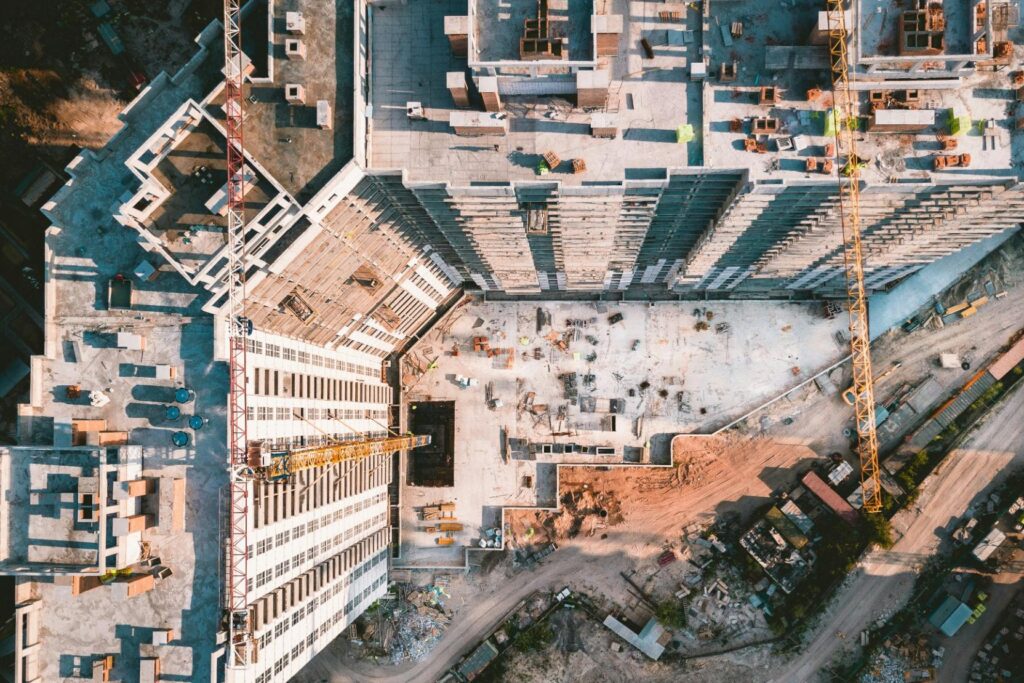
The construction site is a sensory-rich environment. It has its own unique palette and symphony. The photographer finds beauty in the materials themselves—the rough, aggregate texture of wet concrete, the vibrant, industrial orange of a safety net, the cool, blue-gray of stacked steel. There are the piles of earth, the coils of wire, the pallets of brick. Each is a note in a larger composition. The sounds, too, can be seen as music rather than noise: the rhythmic, percussive clang of a hammer, the deep, resonant groan of heavy machinery, the staccato shouts of a foreman. It is the raw, industrial symphony of a city being born.
The Abstract in the Unfinished
As a structure rises, it passes through phases of abstraction. A wall with openings for windows that have not yet been installed becomes a minimalist sculpture of solid and void. A floor with exposed rebar creates a complex, linear pattern that feels both random and intentional. These unfinished states are beautiful in their own right. They are temporary, fleeting compositions that will soon be covered by drywall and paint. The photographer’s role is to capture this moment of abstract potential, before the building settles into its final, utilitarian form. This appreciation for abstract forms found in industrial settings is a hallmark of modernist art, celebrated in the collections of museums such as the Tate Modern.
The Slow Unveiling
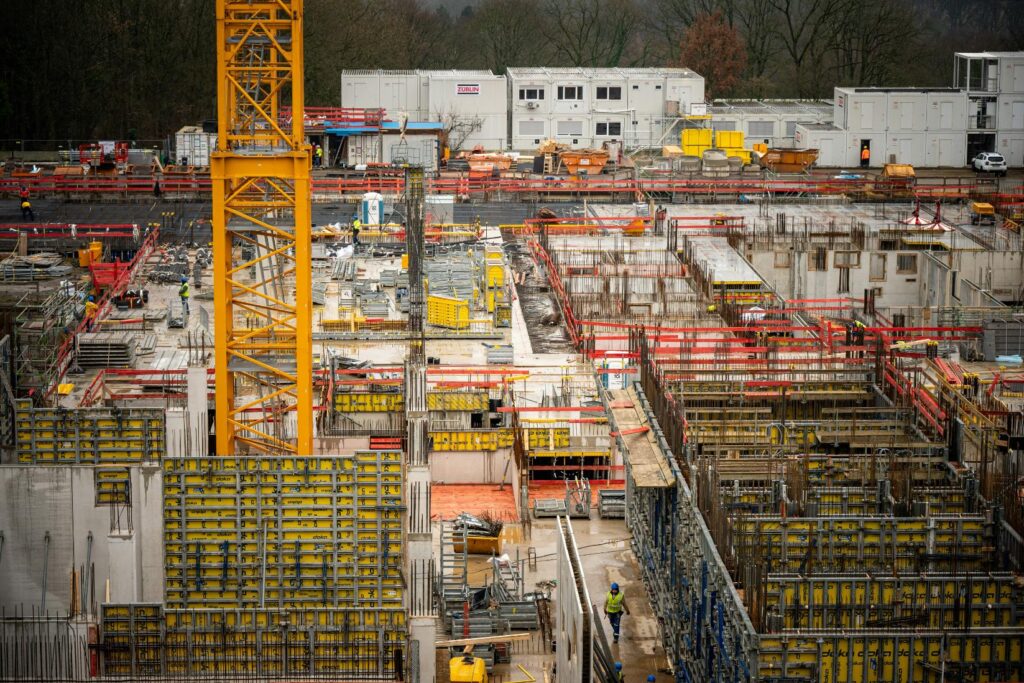
The final act is the slow unveiling. The protective netting comes down, the scaffolding is dismantled piece by piece, and the finished facade is revealed to the city. This process is its own form of performance. There is a sense of emergence, of a new entity taking its place in the urban fabric. To photograph this transition is to capture the satisfying conclusion of a long, slow dance. It is the moment the temporary gives way to the permanent. This cycle of creation and transformation in our built environments is a subject of endless fascination, and is often discussed in architectural publications like ArchDaily.
Beauty in the Process
To see the poetry in a building site is to find beauty in the process, not just the product. It is to appreciate the messy, unpredictable, and deeply human effort that goes into making something new. It is a reminder that our cities are not static objects, but are constantly in a state of becoming. The construction site is the most visible manifestation of this truth. It is a temporary monument to progress and change.
By reframing our perspective, we can see the construction zone not as an inconvenience, but as a generous, public performance of creation. It is a ballet of materials and movement, a symphony of industrial sounds, and a slow, methodical poem written in concrete and steel. We need only to pause, look closely, and allow ourselves to be moved by the choreography.
ust as new structures rise, old ones are given new life, creating another form of architectural poetry. Discover how repurposed buildings carry concrete memories into the future.