Nocturnal Communion: Seeking Stars in Light-Polluted Worlds
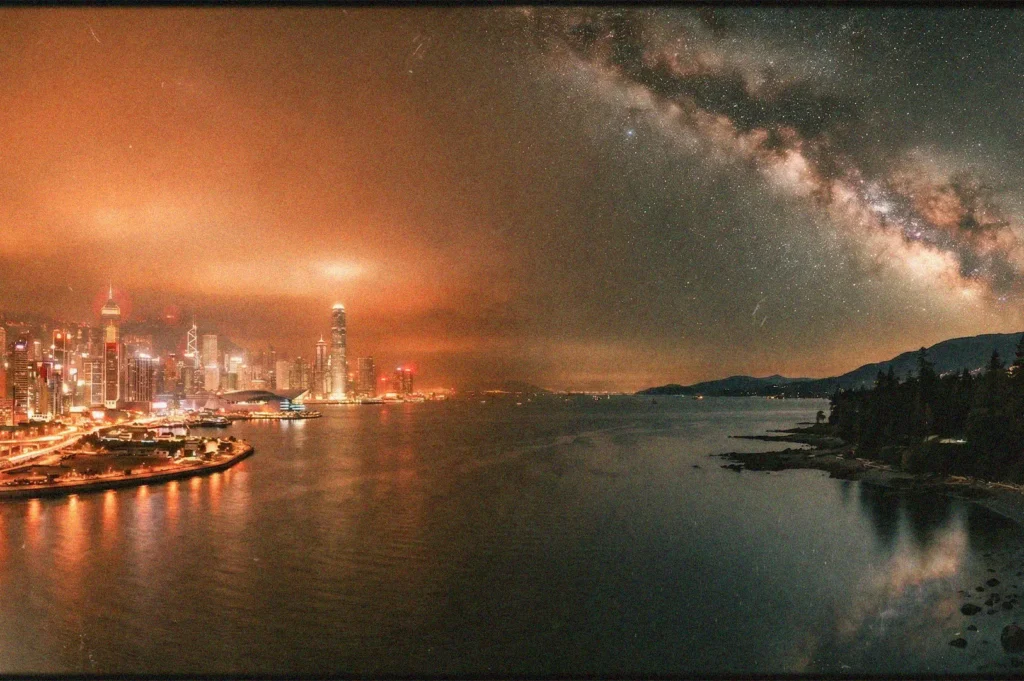
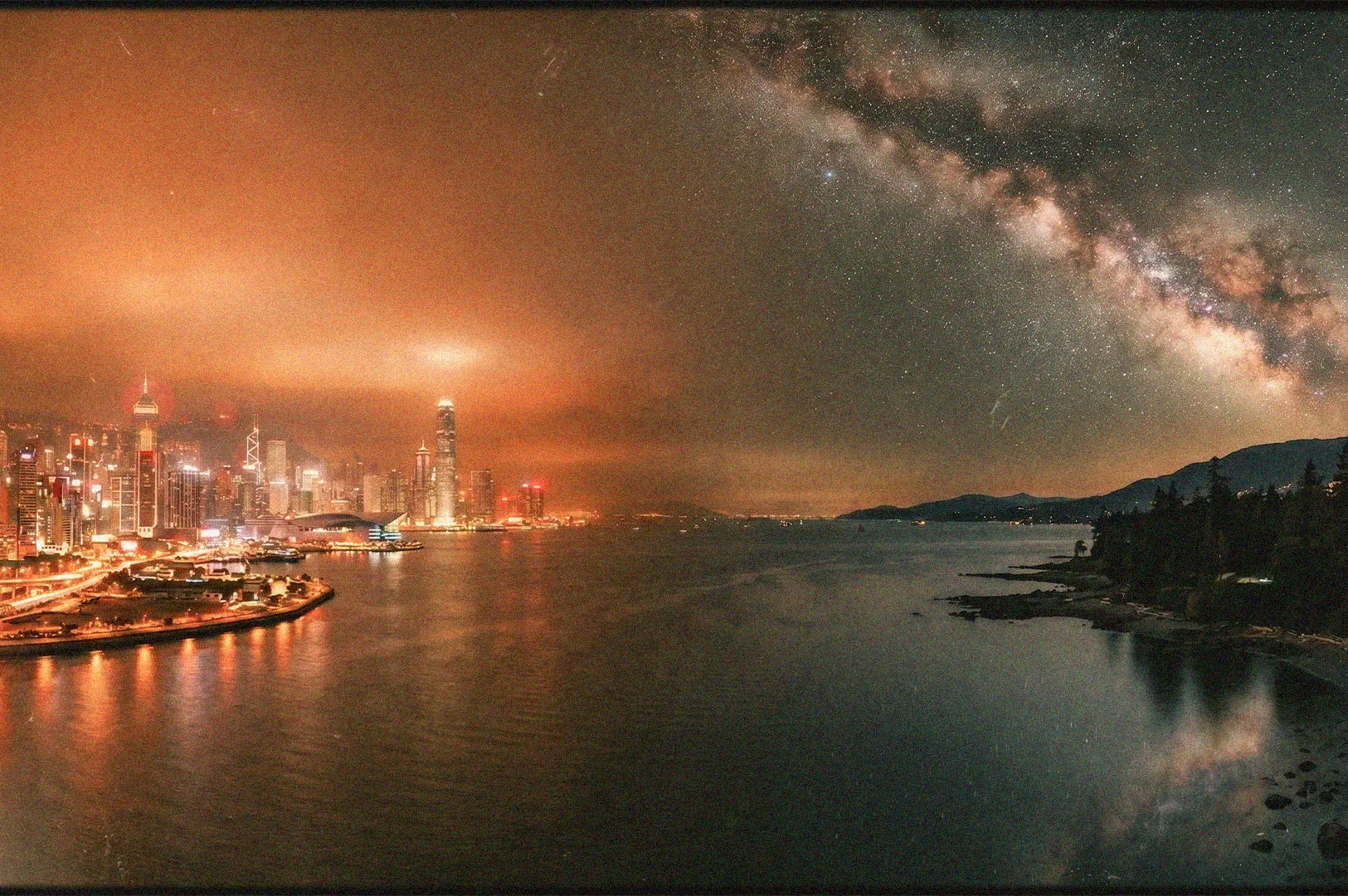
For many people who live in cities, the night has become a ceiling.
It glows orange, white, blue, and sometimes a tired shade of grey. Towers stay awake. Windows flicker. Streetlamps hum through the hours. The sky is still there, technically, but it rarely feels open. It becomes something above the city rather than beyond it.
So when urban dwellers travel to dark-sky preserves, they are not simply chasing stars. They are travelling toward a forgotten scale of feeling.
They arrive with cameras, blankets, thermos flasks, red-light torches, and the familiar restlessness of people who have been shaped by screens and schedules. At first, many still move like they are in the city. They check settings. They check messages. They look for the right place to stand.
Then the dark begins to settle.
The Face Before The Stars
The first photographs are often not of the sky.
They are of faces adjusting to it.
There is a particular expression people carry when the Milky Way first becomes visible. It is not exactly surprise. It is closer to recognition, as if some ancient part of the body remembers what the mind has not seen in years.
The shoulders drop. The mouth opens slightly. People stop performing for one another. Even those who came to take a photograph begin to forget the pose they had planned.
In that moment, the camera becomes less important as an instrument of capture and more important as a witness. It records the pause before language returns.
Leaving The City Behind
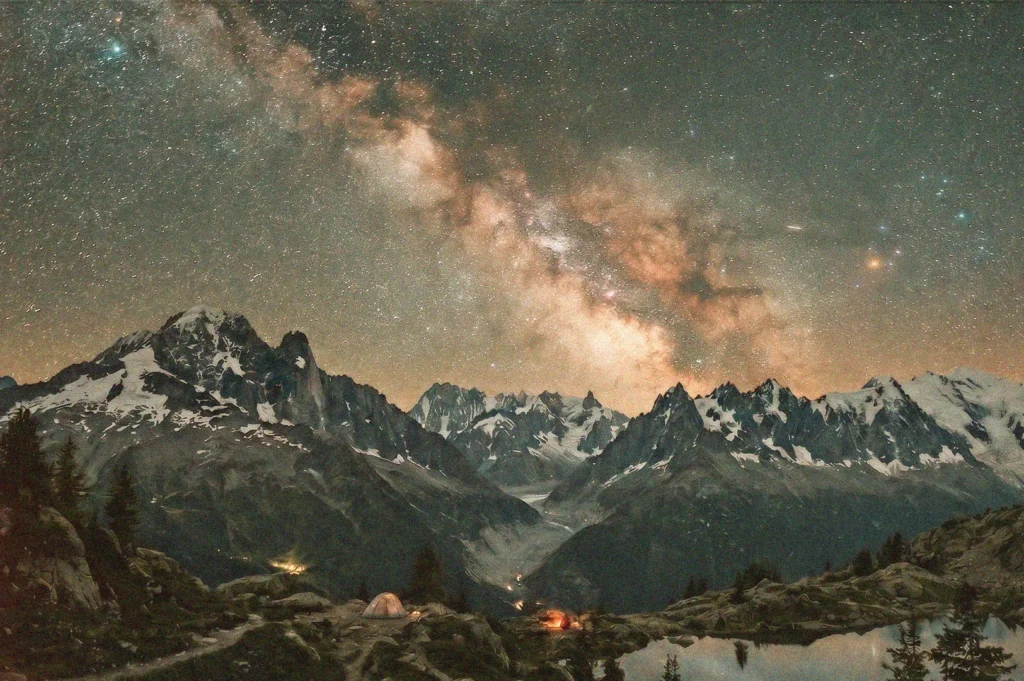
Light pollution does more than hide stars. It changes our relationship with distance.
In the city, everything feels near because everything is illuminated. Roads, signs, entrances, advertisements, reflections, and faces are held in constant visibility. There is comfort in that. There is also a quiet exhaustion.
A dark-sky preserve offers the opposite. It withholds. It asks the eyes to wait. It reminds the body that not everything must be instantly clear to be real.
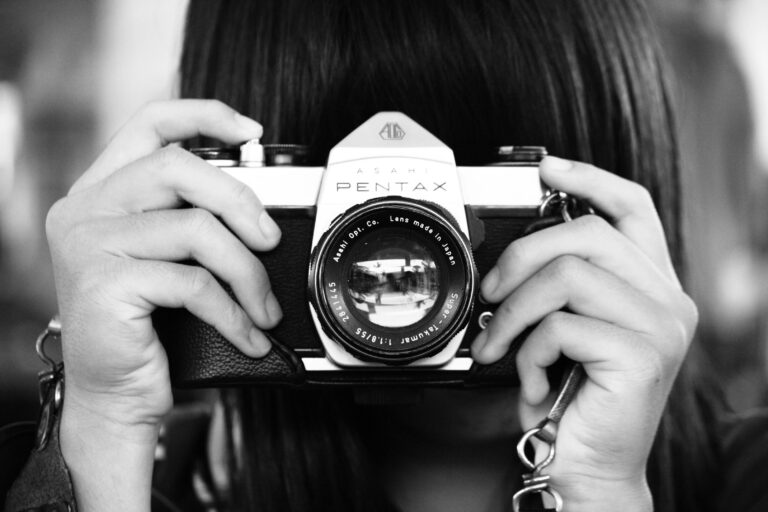
For photographers, this waiting becomes part of the image. Long exposures gather what the naked eye cannot hold at once. Shadows deepen. Stars begin to mark themselves across the frame. The landscape becomes patient.
This is where the philosophy behind Slow Shutter feels especially fitting. Some images do not open immediately. They need darkness, duration, and a willingness to stand still long enough for the unseen to arrive.
A Different Kind Of Portrait
The most moving photographs from these journeys are not always the sharpest.
A person sitting on a rock, looking upward. A couple standing apart, both silent. A child pointing at a cluster of stars with a seriousness that adults often lose. These images carry something larger than scenery.
They show people being gently reduced.
Not diminished in a cruel way, but returned to proportion. Under a sky dense with stars, the self becomes smaller and, somehow, less lonely. Worries do not disappear. Grief does not become meaningless. But the frame around them changes.
The night sky gives urban dwellers a rare confrontation with scale. It says, without words, that life is brief, bright, fragile, and still connected to something immense.
Photographing The Return
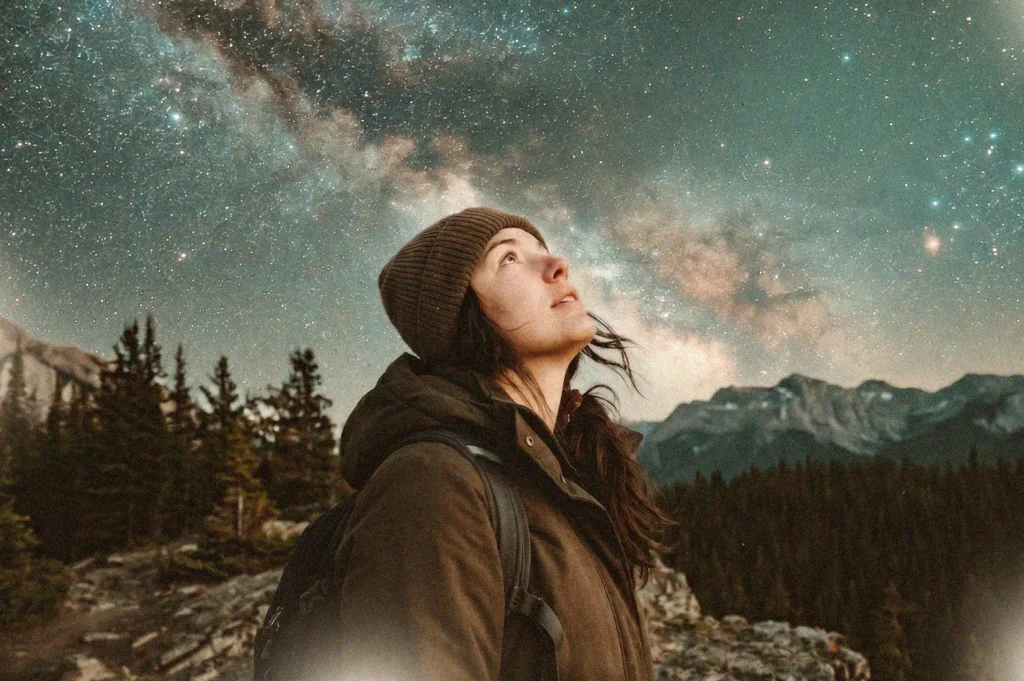
There is a tenderness in documenting this reunion.
The photographer must be careful not to turn awe into spectacle. The point is not to make people look enlightened or cinematic. The point is to notice the subtle shift that happens when someone sees the night as more than darkness.
A hand resting still. A face lit faintly by starlight. A silhouette that no longer seems posed. These details reveal the emotional journey better than grand gestures ever could.
In a world trained to overexpose everything, the dark becomes almost intimate.
It gives people room to feel without immediately explaining what they feel.
Under The Same Sky
Eventually, the city will call them back.
There will be trains, elevators, deadlines, messages, and streets bright enough to erase the stars again. But something may remain. A memory of looking upward and finding depth where there used to be glare. A quiet awareness that the sky has not vanished simply because the city has hidden it.
Nocturnal communion is not only about seeing stars.
It is about remembering that the night was never empty. It was waiting for our eyes to adjust.