Umbrella Constellations: The Quiet Architecture of Shared Rain
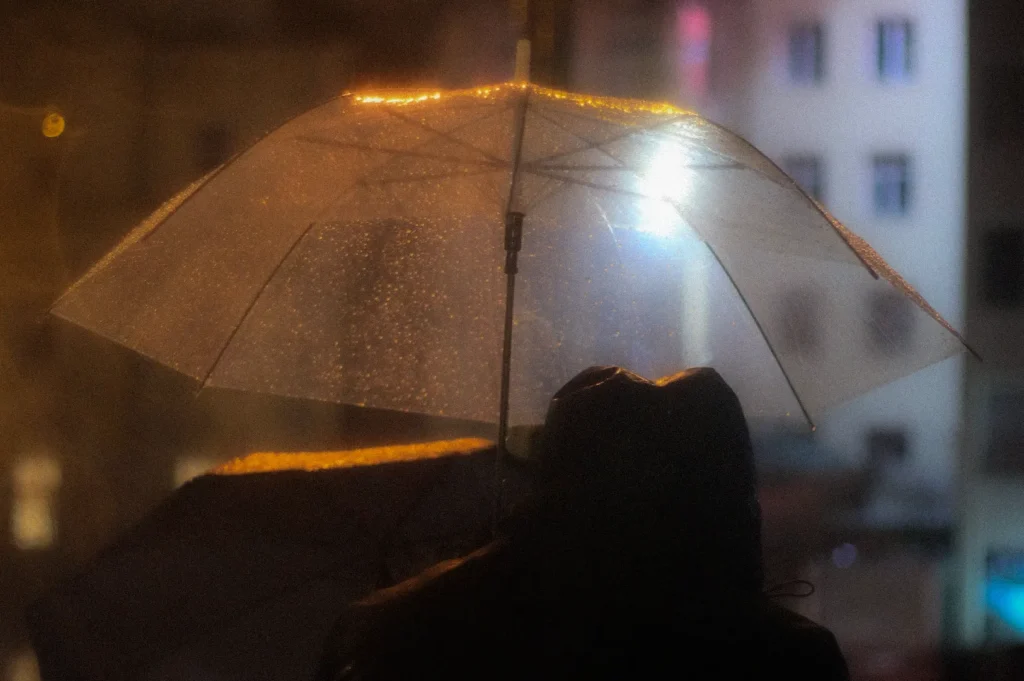
The rain begins, and the street transforms. What was bare pavement becomes a slow river of color. Domes of fabric rise one by one, blooming open like dark flowers. From a sheltered doorway, I watch them gather. A crowd of strangers, suddenly roofed in their own small skies.
This is the moment I wait for. Not the storm itself, but the way people answer it. Rain gives the street a new grammar, and the umbrellas become its moving letters.
Umbrellas as Moving Architecture
Each umbrella is a building you can carry. A roof, a single supporting column, and a small room of dry air beneath. When the rain falls, the city sprouts hundreds of these tiny structures at once.
They drift and turn. They pause at crossings, then scatter again. A skyline that breathes, rebuilds, and dissolves within a single minute. No architect could design something so fluid. The pattern lives only for a breath, then becomes something else entirely.
To photograph this is to accept impermanence. You cannot frame the same arrangement twice. The street offers you a shape, and just as quickly takes it back.
The View From Above
Climb a little higher, and the meaning shifts. From a bridge or a window, the umbrellas flatten into pure pattern. They become circles on a gray canvas, a scattered field of dark coins moving across wet stone.
This is where the constellation reveals itself. Crowds that feel chaotic at street level resolve into rhythm from above. The eye finds clusters, gaps, and slow currents of movement. Photographers drawn to this aerial honesty often find kinship in the work archived at the The Museum of Modern Art, where the everyday is reframed as quiet geometry.
What does it mean to see people as shapes? Perhaps it is not coldness, but tenderness at a distance.
The Brief Intimacy of Shared Shelter
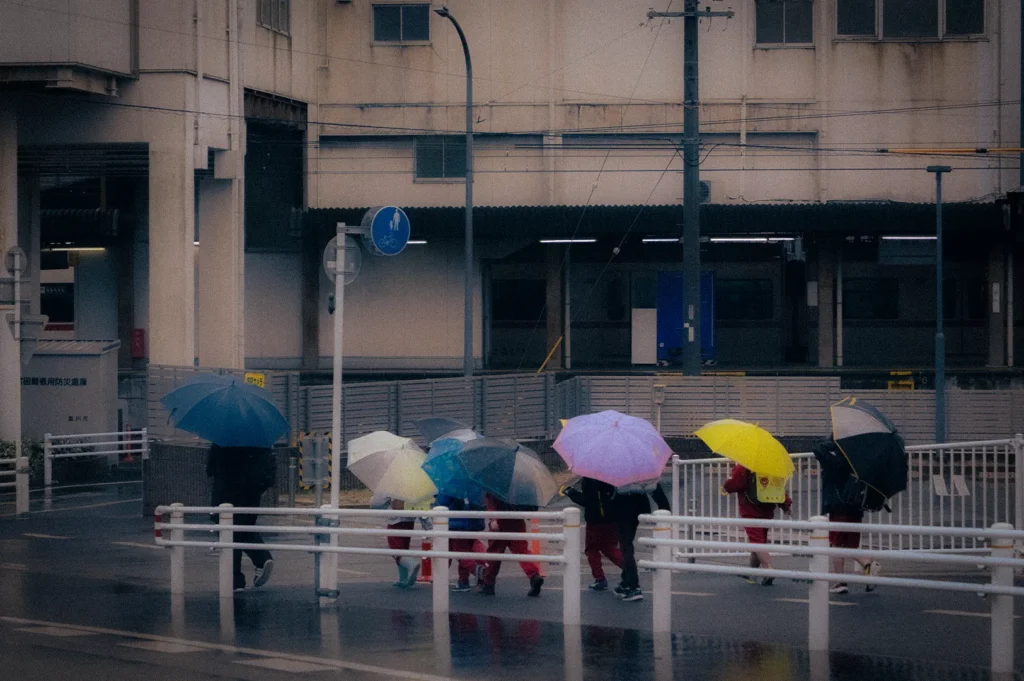
Then I lower the camera and step back into the crowd. Up close, the story changes again.
Two strangers crowd beneath one umbrella, shoulders touching, faces turned politely away. A child clutches a parent’s hand under a shared dome. A fleeting closeness offered freely, then released without a word. The rain forces a soft negotiation between bodies that would otherwise keep their distance.
These small mercies move me most. Shelter becomes a gift passed between people who will never meet again. The thoughtful conversations hosted by Aperture remind me that the deepest images often hold this kind of quiet generosity.
Waiting for the Gesture
Patience is everything here. I let the lens rest and simply watch. The tilt of an umbrella to greet another, like a small bow between passing lives. The pause before two people decide to share. The reluctant smile when the rain wins.
You cannot force these gestures. You can only be ready when they arrive.
Color, Reflection, and Falling Light
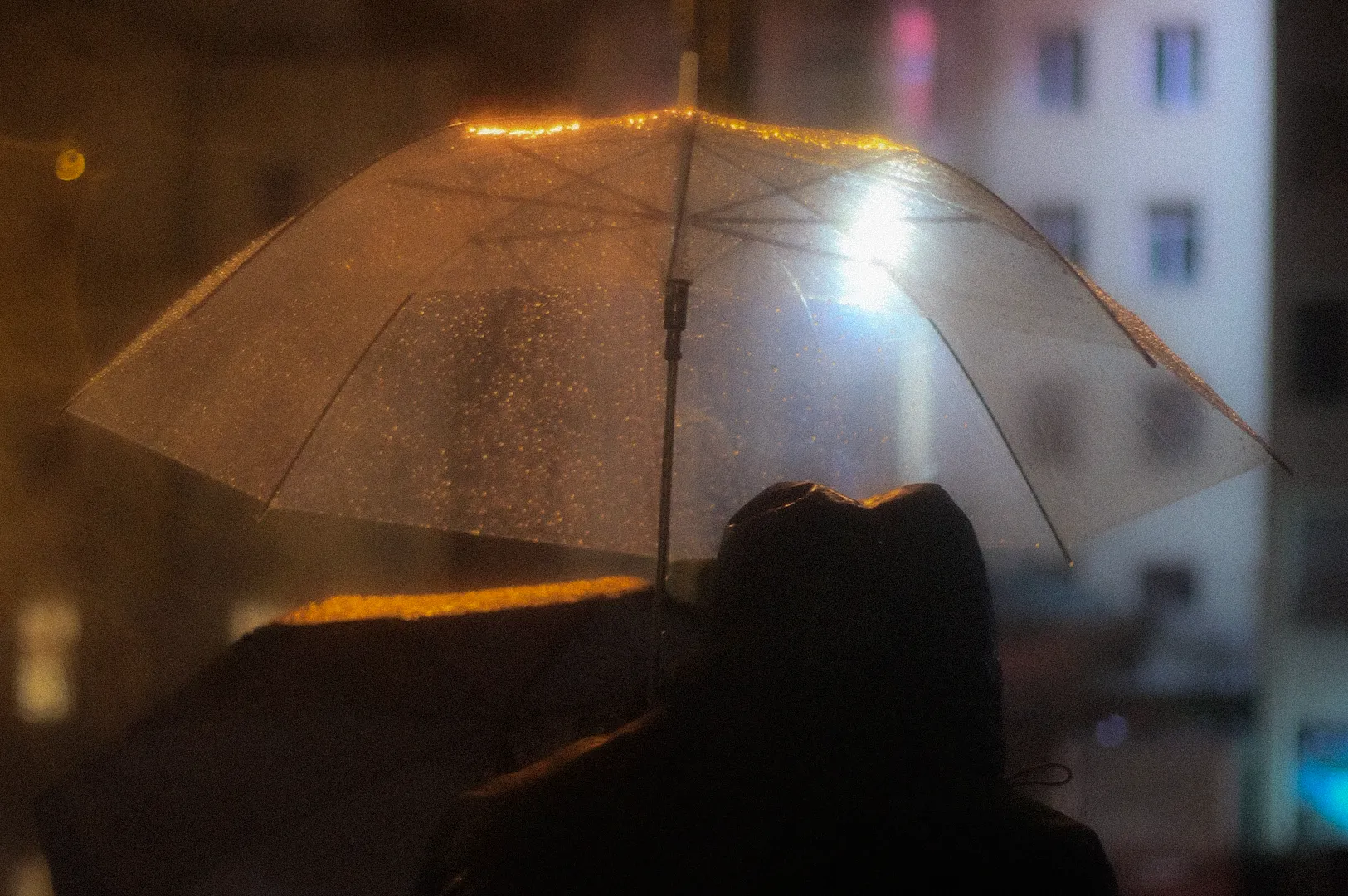
Rain rewrites the palette of the street. Surfaces darken and shine. Puddles become broken mirrors, holding the umbrellas twice over. A single red canopy among a sea of black becomes a heartbeat in the frame.
Slow your shutter a little, and the falling rain softens into thin silver threads. Let the reflections lead the composition. We often circle this idea in Slow Shutter—that beauty hides in the ordinary moments we rush past without seeing.
What the Rain Teaches
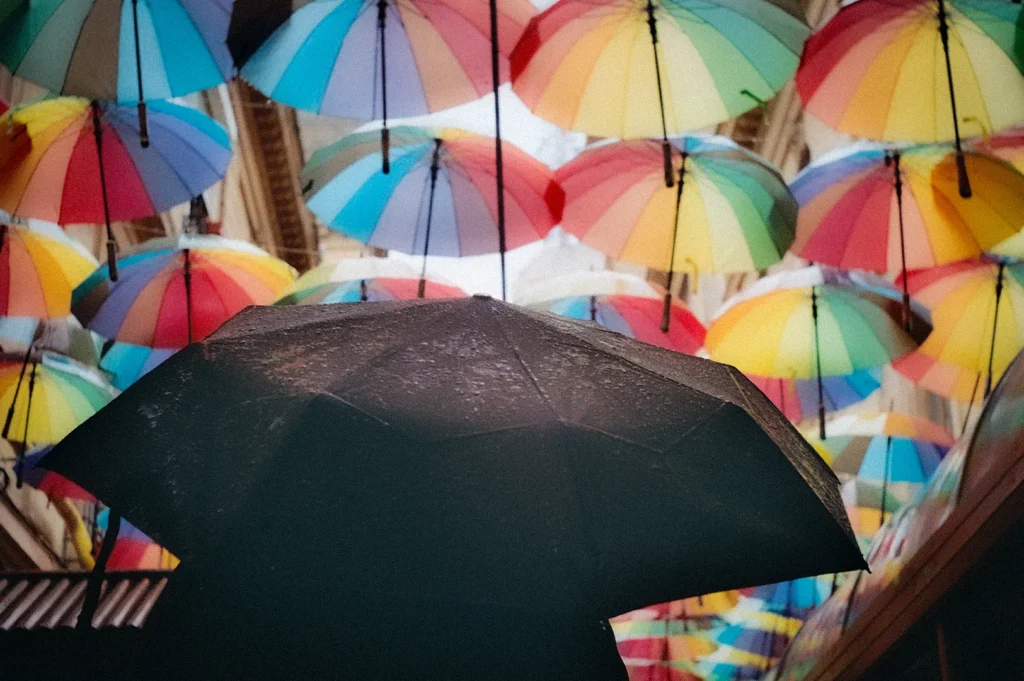
Why do we remember rainy days so vividly? Perhaps because they slow us down. They ask us to pause, to share, to notice the people beside us.
The umbrella crowd is a constellation precisely because it cannot last. Each pattern is a sentence the sky writes once, then erases. To photograph it is to honor what is fleeting, to hold a single breath of connection before the clouds move on.
So the next time the rain arrives, do not hurry for cover. Stand still. Watch the domes rise and the strangers gather. Let the falling water teach you how to see the brief, luminous architecture of being together.