Microscopic Wilderness: The Unseen Natural World at Our Feet
There are forests we do not enter because we are too tall for them.
They live between paving stones, on the shaded side of old walls, along the damp backs of trees, in the soft places where rain lingers after everyone has gone indoors. Moss, lichen, and fungi ask very little from us. They do not rise into spectacle or rearrange the horizon. They simply continue beneath the hurried choreography of our feet.
Looking down is not a lesser form of seeing. It is a small correction.
The ground, so often treated as passage, becomes a place. The miniature becomes territorial. A patch of moss becomes a canopy. A spread of lichen becomes a weathered map. A mushroom after rain becomes a temporary shelter in a country that disappears when the sun returns.
The Ground Remembers
Most days, the ground is only something we cross. It receives the pressure of our shoes, the fall of leaves, the spill of rainwater, the dust of construction, and the small accidents of passing life.
We trust it to hold us, but rarely ask what it is holding.
Look closer, and the surface begins to complicate itself. Moss gathers in the seams. Lichen stains the wall with patient color. Fungi lift from the soil like a thought that finally reached the surface.
What first appears still is often busy with return: moisture, decay, spores, roots, insects, and the slow exchange between what has ended and what is beginning again.
A Forest Without Height
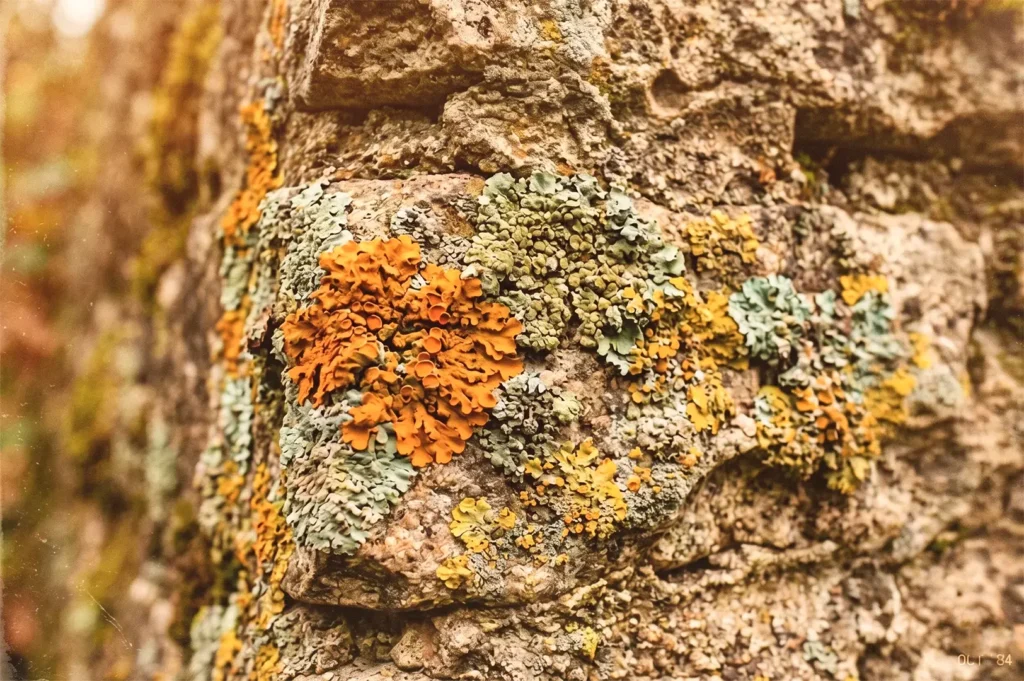
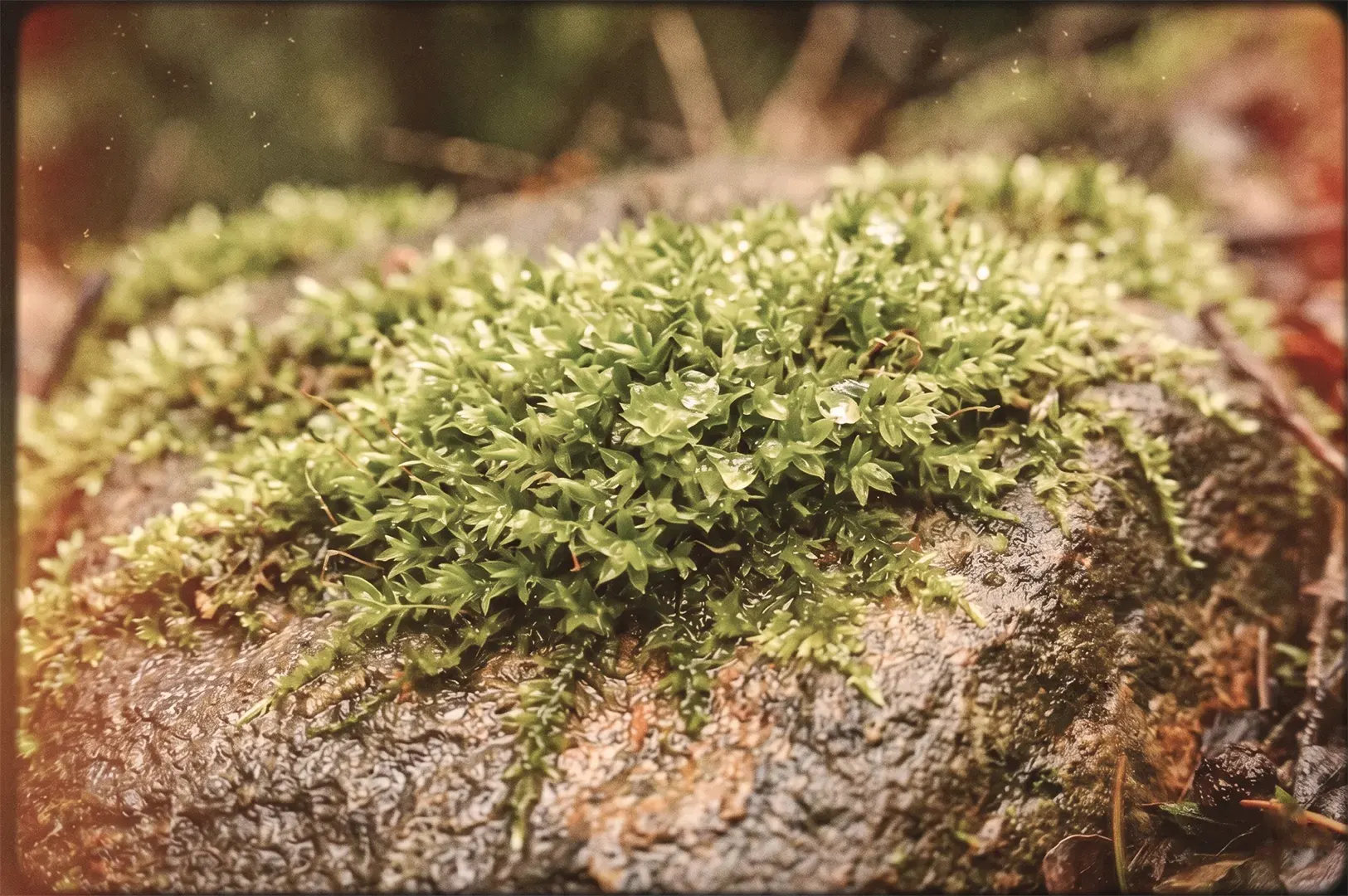
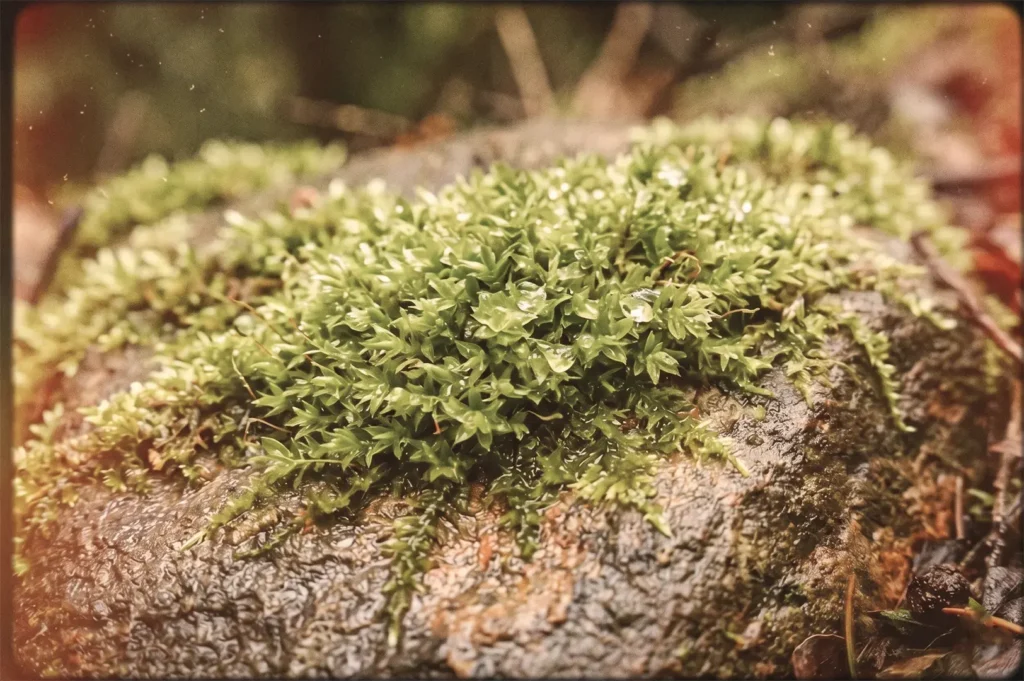
Moss does not grow loudly. It gathers, softens the hard edge of stone, and makes old bark feel almost tender. It belongs to the same quiet practice as photographing places of personal recovery, where landscape is not treated as scenery, but as a place that keeps something of what passed through it.
Lichen Maps
Lichen is easily mistaken for residue, which may be why it feels so generous when finally noticed. It clings to stone, bark, and concrete with an almost ancient patience.
The U.S. Forest Service describes lichens as composite life forms composed largely of a fungus with a photosynthetic partner, such as green algae or blue-green bacteria. That fact makes their surfaces feel even stranger: what looks like one quiet stain is already a small collaboration.
To photograph lichen is to photograph time without drama. There is no decisive instant, only the evidence of years. Close framing reveals islands, borders, dry riverbeds, and territories that never asked to be named.
Fungi After Rain
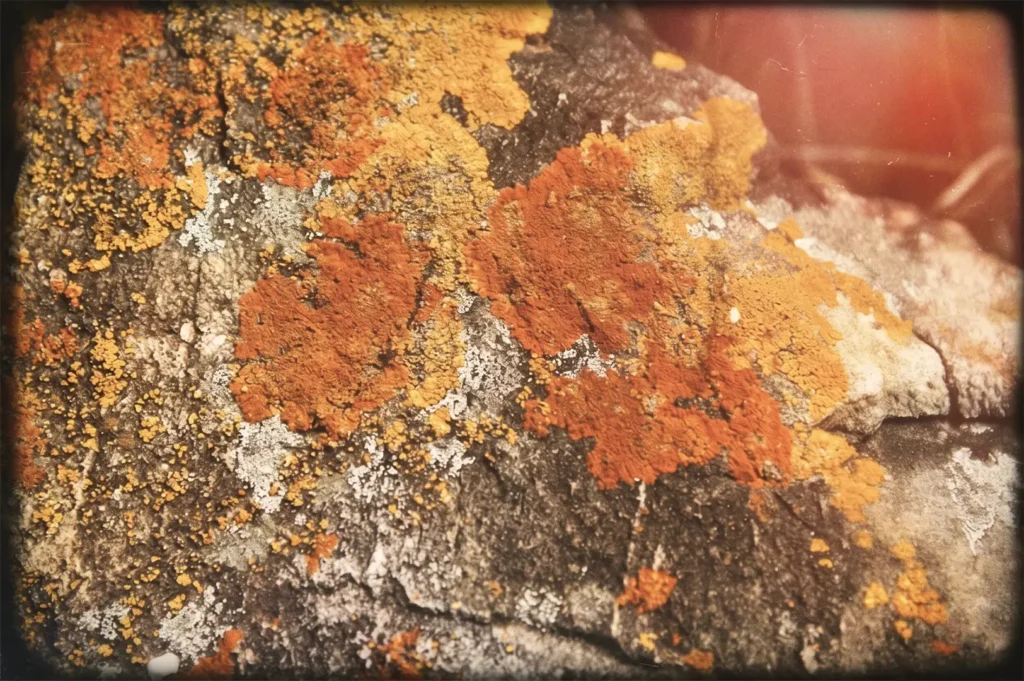
Fungi arrive like small messages from underneath. For most of their lives, many remain hidden, working through soil, wood, and decay. Kew Gardens notes that beneath mushrooms, truffles, and crusts lies mycelium, the hidden network of fungal filaments living in soil and other substrates.
Then rain loosens the world, and something appears: a pale cap through leaf litter, a cluster beside a root, a thin stalk carrying its roof with surprising seriousness. At ground level, a mushroom can become architecture. Fallen leaves become cliffs. Soil becomes terrain. A twig becomes a fallen tree across an imagined road.
Small Signs of Vastness
The miniature natural world often reveals itself through details that would disappear in a faster walk. The work is not to arrange them into importance, but to notice the importance already waiting there.
- Dew held at the tip of moss like a private weather system
- Lichen spreading across stone like an unnamed country
- Fungi lifting through soil after rain, brief and deliberate
- Fine roots and threads of decay returning matter to life
These small signs disturb the usual hierarchy of attention. The spectacular is no longer somewhere far away. It is underfoot, pressed into bark, gathered along a wall, or hidden in the damp seam between stones.
Learning to Lower the Body
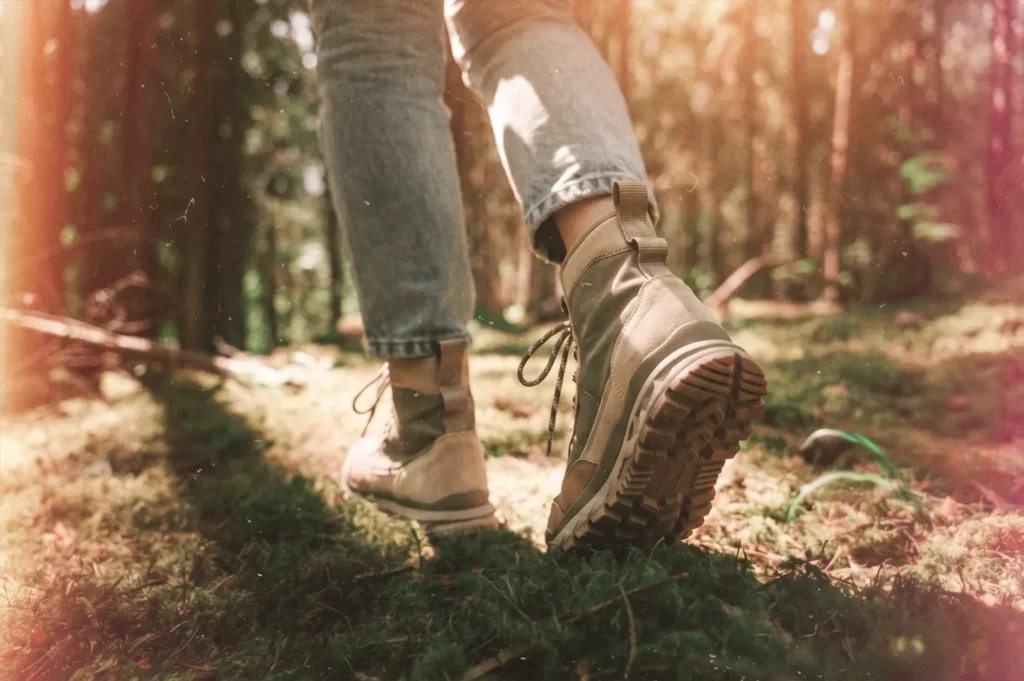
There is a quiet humility in photographing this scale of life. The body must lower itself. The hand must slow down. Wind becomes large. Focus becomes fragile. Light changes across a surface no wider than a thumb. A movement of a few millimeters can change the whole frame.
The subject does not move closer for the photographer. The photographer must become less certain, less upright, less in command. This is part of the lesson. To photograph small wilderness well, the camera cannot behave like a collector. It has to behave more like a guest.
The Ethics of Nearness
A miniature landscape is easy to damage. One careless footstep can flatten what the lens has just made vast. A twig moved for a cleaner frame may disturb the small shelter of something unseen. The best photographs here often come from restraint. A leaf can remain where it fell. Soil can stay on the mushroom cap. A strand of moss can lean imperfectly toward the light. These details keep the image from becoming too polished.
They allow the subject to remain alive, not merely arranged.
What the Camera Changes
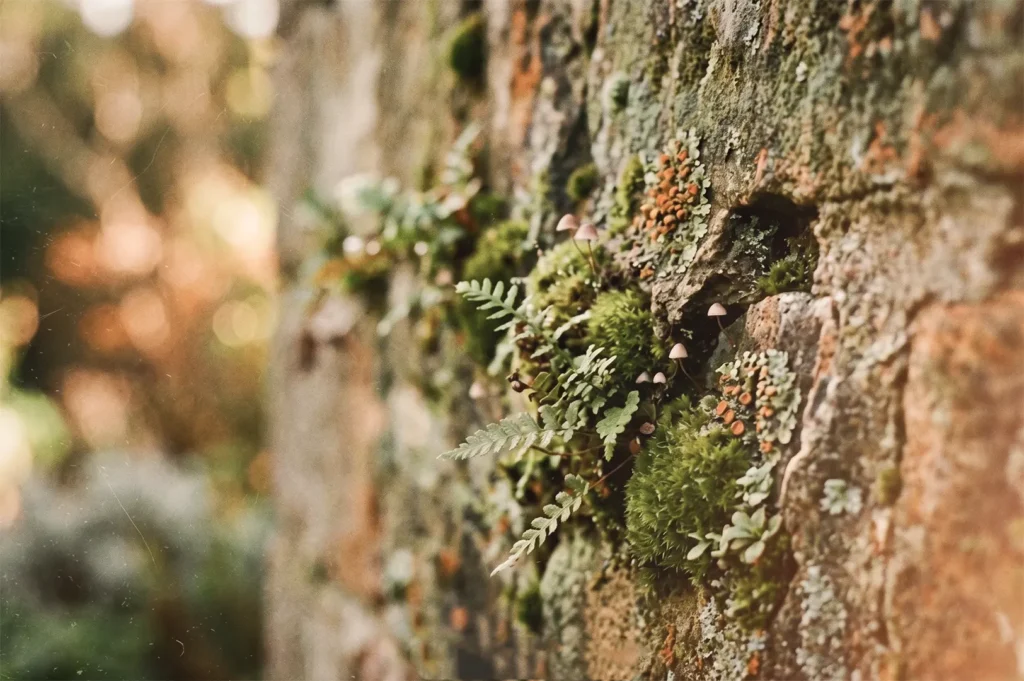
The camera does not give moss, lichen, or fungi their meaning. They already belong to systems of moisture, decay, growth, and return. What the camera changes is the scale of our encounter. It gives the eye permission to remain where the body usually passes.
A cracked stone can become geography. A wet patch of moss can become weather. A cluster of fungi can reveal the labor of an unseen network. In that sense, this small practice belongs beside The Language of Leaves, where seasonal change is not treated as spectacle, but as a slower form of speech.
Below Attention
Overlooked beauty is not always hidden because it is rare. Often, it is hidden because it is ordinary.
Moss on concrete, lichen on a wall, fungi beneath a tree: these belong to the daily path. Their invisibility comes from speed, familiarity, and the habit of looking only at what stands at our height.
To notice them is not to make them grander than they are. It is to realize that grandeur was never the only measure of wonder.
The Wilderness Beneath Our Feet
The unseen natural world at our feet is not separate from the larger wilderness. It is the wilderness, compressed into a scale most people have learned to ignore. To photograph it well is to practice a gentler form of attention, one that finds vastness without needing distance.
The moss continues to hold rain. The lichen continues its slow mapmaking. The fungi continue their hidden work beneath the surface.
Above them, people continue walking, until sometimes the body stops, the eye lowers, and the ground opens.