The Third Space: Portraits in Transit
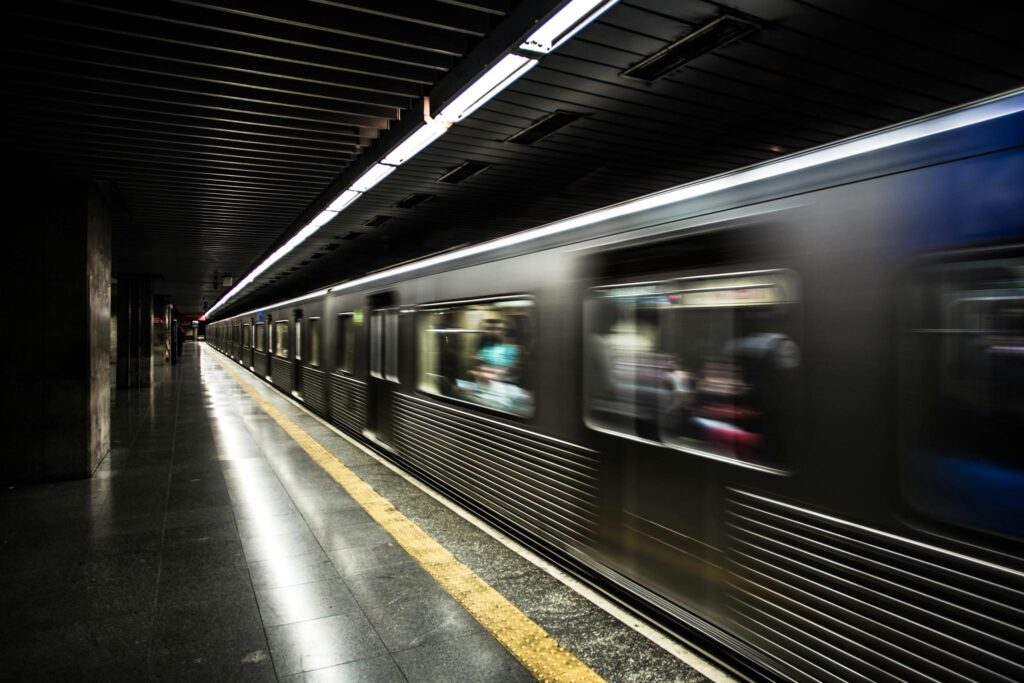
We spend so much of our lives defined by where we are: the parent at home, the professional at the office, the friend at the dinner party. But there exists a liminal territory between these destinations, a “third space” where we are neither here nor there. This is the space of the commute—the bus ride, the subway car, the ferry crossing. In this suspended state, the roles we play fall away, and a unique form of presence emerges. This photographic essay explores the quiet, suspended animation of the commute, documenting the faces of travelers who are momentarily paused in the rush of modern life.
The Limbo of the Journey
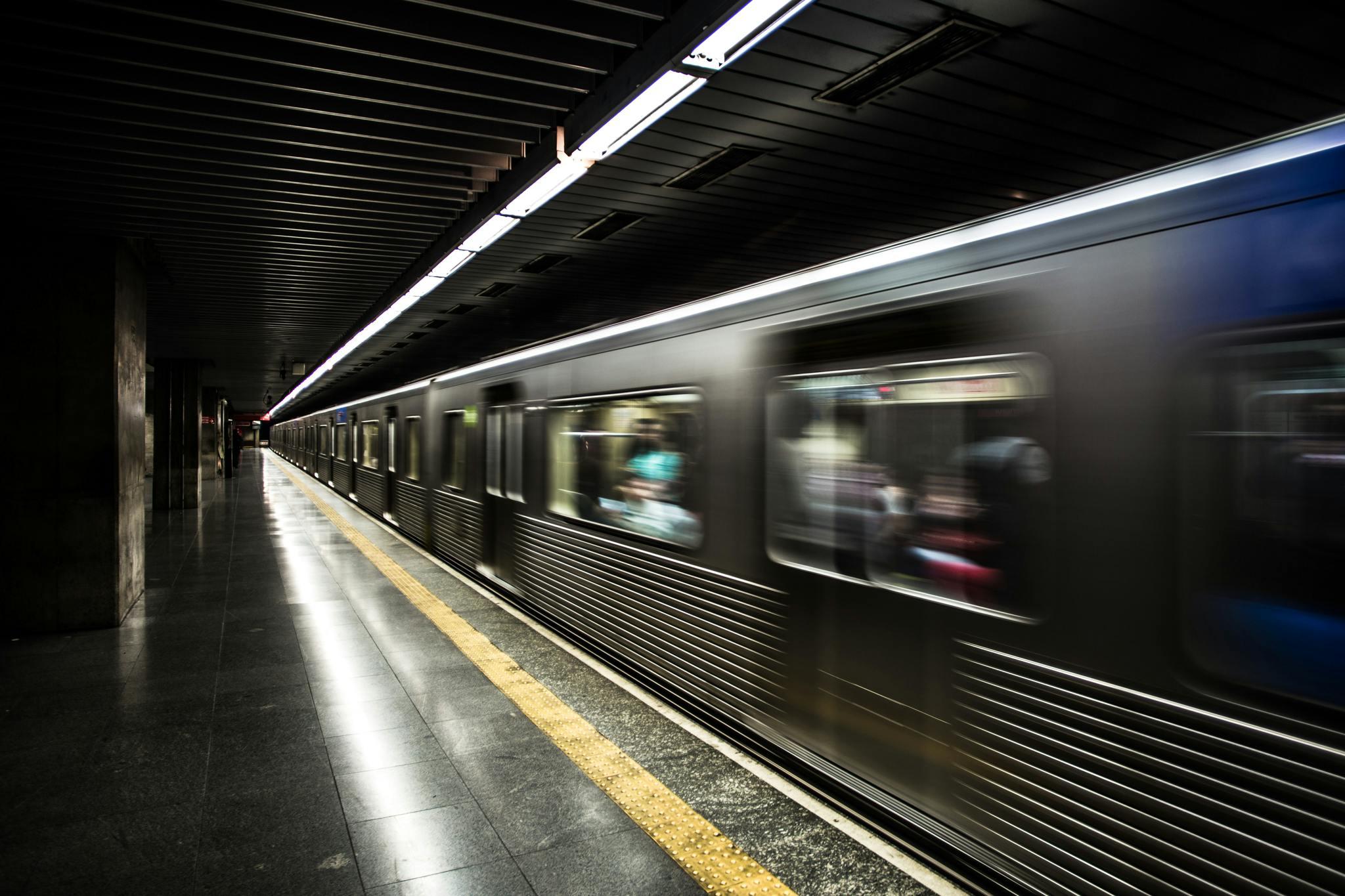
To step onto a train is to enter a temporary stasis. The doors slide shut with a hollow, metallic rattle, sealing us into a capsule of time that belongs to no one. Here, the obligations of the departure point have ceased, and the demands of the destination have not yet begun. In this gap, the face relaxes. The muscles used to smile, to frown, or to project confidence go slack. What remains is something profoundly authentic. The camera captures a face stripped of its social mask, revealing a raw, unperformed version of the self that is rarely seen by others. It is a portrait of the human being in “standby mode,” waiting for the next act to begin.
The Gaze Turned Inward
The most striking feature of the commuter is the eyes. Even when open, they often seem to be looking at nothing. It is the “thousand-yard stare” of the daily traveler, a glassy, reflective gaze that penetrates the physical world to rest on something internal. They might be staring at an advertisement or the back of a coat, but they are seeing memories, anxieties, or daydreams. Photographing this state of deep, inaccessible interiority is a delicate challenge. It requires capturing the physical presence of a person while acknowledging that their mind is miles away. This theme of psychological withdrawal in public spaces is a cornerstone of street photography, famously explored by Walker Evans in his subway portraits, a collection often highlighted by institutions like The Metropolitan Museum of Art.
The Geometry of Shared Isolation
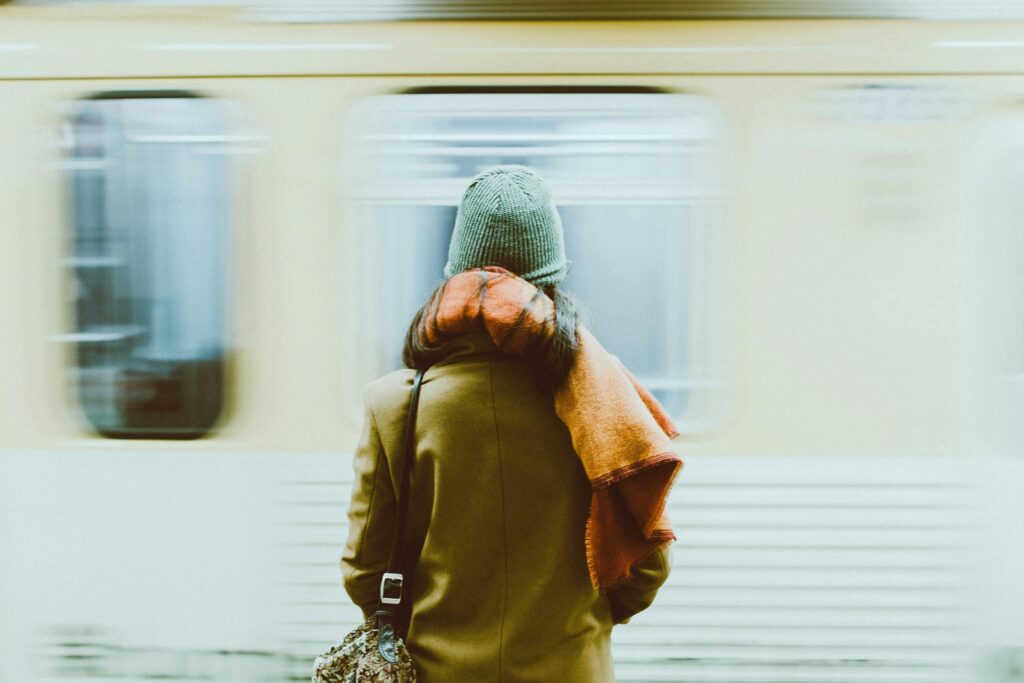
A public transit vehicle is a paradox: it is a place of extreme physical proximity and extreme social distance. We sit shoulder-to-shoulder with strangers, breathing the same air, swayed by the same rhythmic lullaby of the tracks. Yet, we maintain invisible walls. A photograph can map this geometry of shared isolation—the way bodies angle away from each other, the protective barrier of headphones, the fortress made of a book or a phone. There is a poignant beauty in this collective solitude. It speaks to our resilience and our need for a private sanctuary, even in the crush of the crowd.
The Cinema of the Window
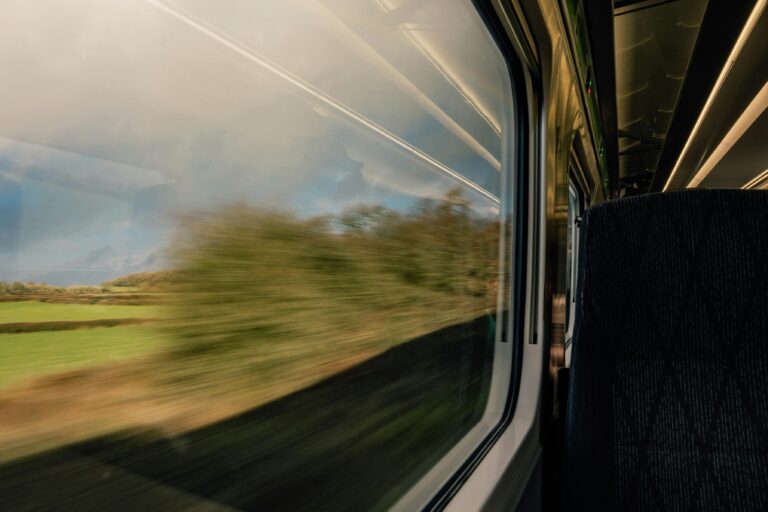
For those lucky enough to have a window seat, the glass becomes a cinema screen. The world rushes by in a blur of rain-streaked gray and green, a constantly shifting backdrop for contemplation. The light in a moving vehicle is erratic and dramatic—the flickering, stroboscopic shadows of a tunnel, the sudden, blinding wash of sun as a train emerges from underground. These lighting conditions create fleeting, cinematic portraits. One moment a face is plunged into darkness, the next it is illuminated like a saint in a Renaissance painting. Capturing these split-second transformations requires intuition and speed, a skill celebrated in the works of Magnum photographers, whose archives can be explored at Magnum Photos.
The Weight of the Day
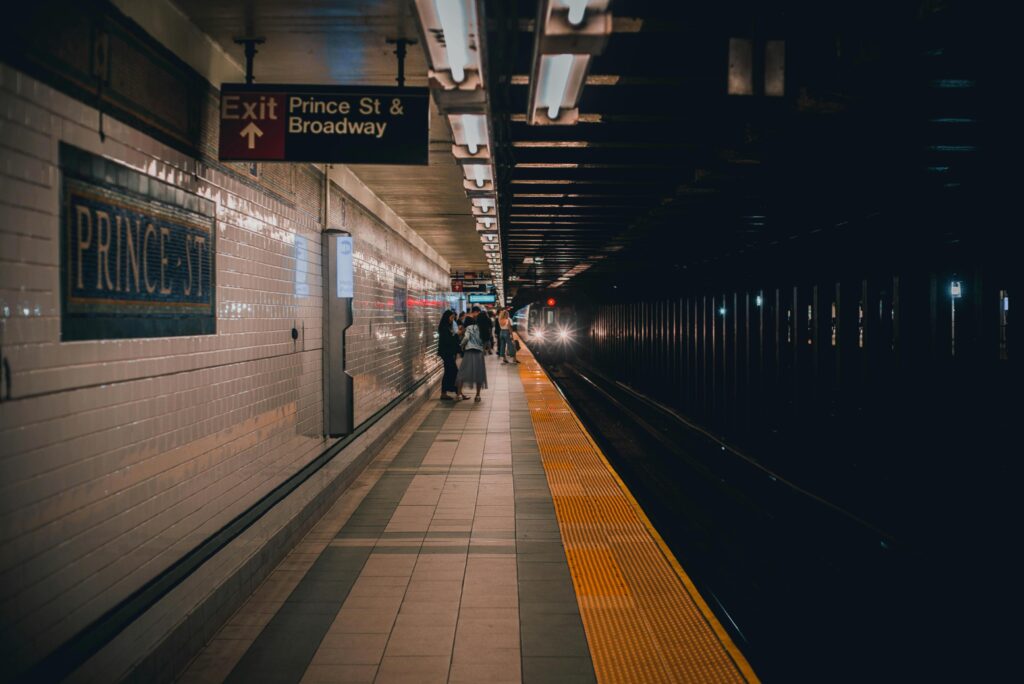
The time of day dictates the emotional tone of the image. The morning commute is tense, focused, vibrating with the electric anticipation of the day ahead. Coffee cups are clutched like talismans; eyes scan news feeds. The evening return, however, is different. It is heavy. The bodies are looser, slumped in the soft focus of exhaustion. The guard is down completely. A photograph of a sleeping commuter, head resting against the vibrating glass, is an image of total vulnerability. It captures the universal weight of labor and survival, a theme that resonates deeply in the history of social documentary photography.
A Sacred Pause
In our accelerated world, the commute is one of the few times we are forced to stop. We cannot make the train go faster. We must surrender to the journey. This surrender creates a unique atmosphere of patience—or resignation. To photograph these moments is to document a sacred, involuntary pause. It is an acknowledgement that in the spaces between our achievements and our obligations, we are simply humans, moving through the world, waiting to arrive. This philosophical exploration of “non-places” and transient states is a rich area of study, often discussed in essays featured on thoughtful platforms like Aeon.
When we look at portraits in transit, we are looking at mirrors. We recognize that vacant, dreaming stare; we know the feeling of being alone in the crowd. These images remind us that the journey is not just dead time to be endured, but a valid and vital part of our existence—a fleeting, transient intimacy with ourselves before the world claims us once again.
Step into the unseen, where dignity glows in the shadows, in Visible Invisibility: Portraits of Night Workers — a portrait of lives that steady the world while we sleep.