Acoustic Architecture: The Sound Signatures of Urban Spaces
Have you ever looked at a photograph and felt the quiet weight of a place before understanding why?
Some spaces hold more than form. They carry a presence that lingers, even when nothing is moving.
Photography, at its most attentive, begins here. Not with what is seen, but with how a space holds and releases sound. Buildings are not silent structures. They shape experience through reflection, absorption, and the subtle movement of air and noise through their surfaces.
When you slow down, you begin to notice it.
The Geometry of Reverberation
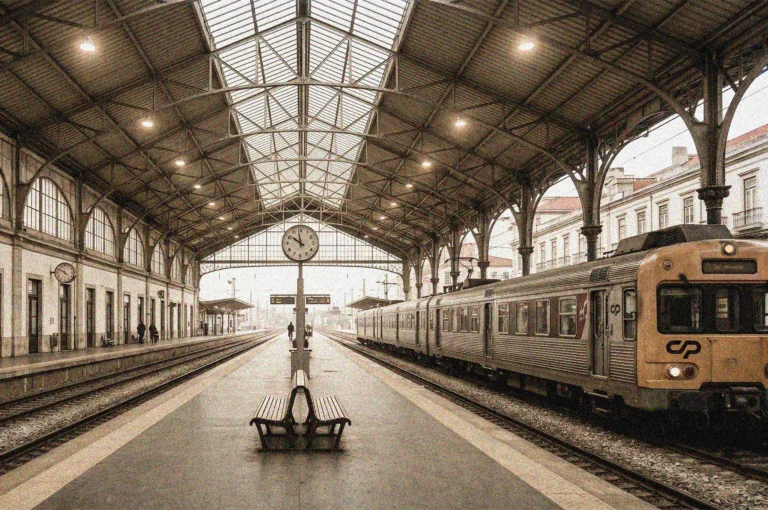
Standing beneath a high ceiling changes how you listen. A single footstep stretches further than expected, returning in fragments rather than clarity. In these spaces, architecture determines how long a moment stays.
When I photograph in places like atriums or transit halls, I wait longer than I normally would. Not for movement, but for the space to settle into itself. The image becomes an attempt to translate something that cannot be seen directly.
There is a quiet relationship between depth of field and reverberation.
A wide frame holds distance the way sound carries through it, while a tighter frame contains it.
Hard Surfaces, Returning Sound
As the city narrows, the acoustic environment changes.
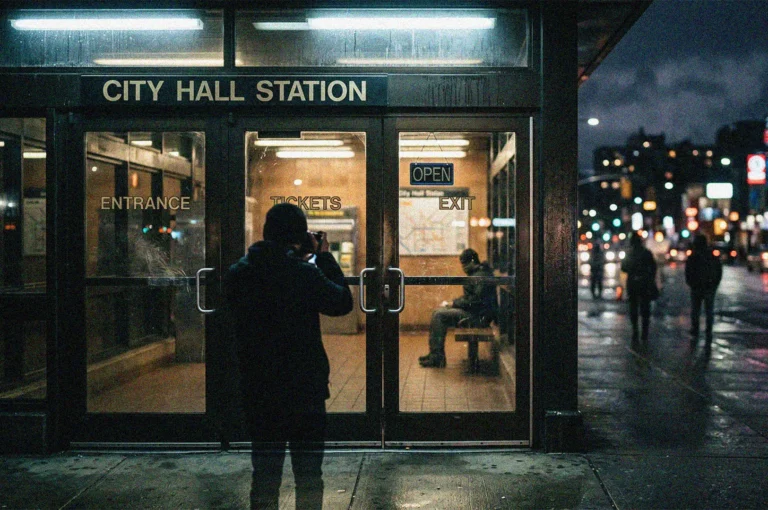
In alleyways lined with concrete and glass, sound becomes sharper. It reflects quickly, without softening. Traffic, footsteps, and distant voices return with a kind of insistence.
The space does not absorb anything. It pushes it back.
Photographing here feels different. The lines are harder, the contrast more pronounced, and the frame begins to carry a sense of pressure shaped by reflection.
Soft Spaces and Contained Quiet

Then there are spaces that hold sound instead of returning it.
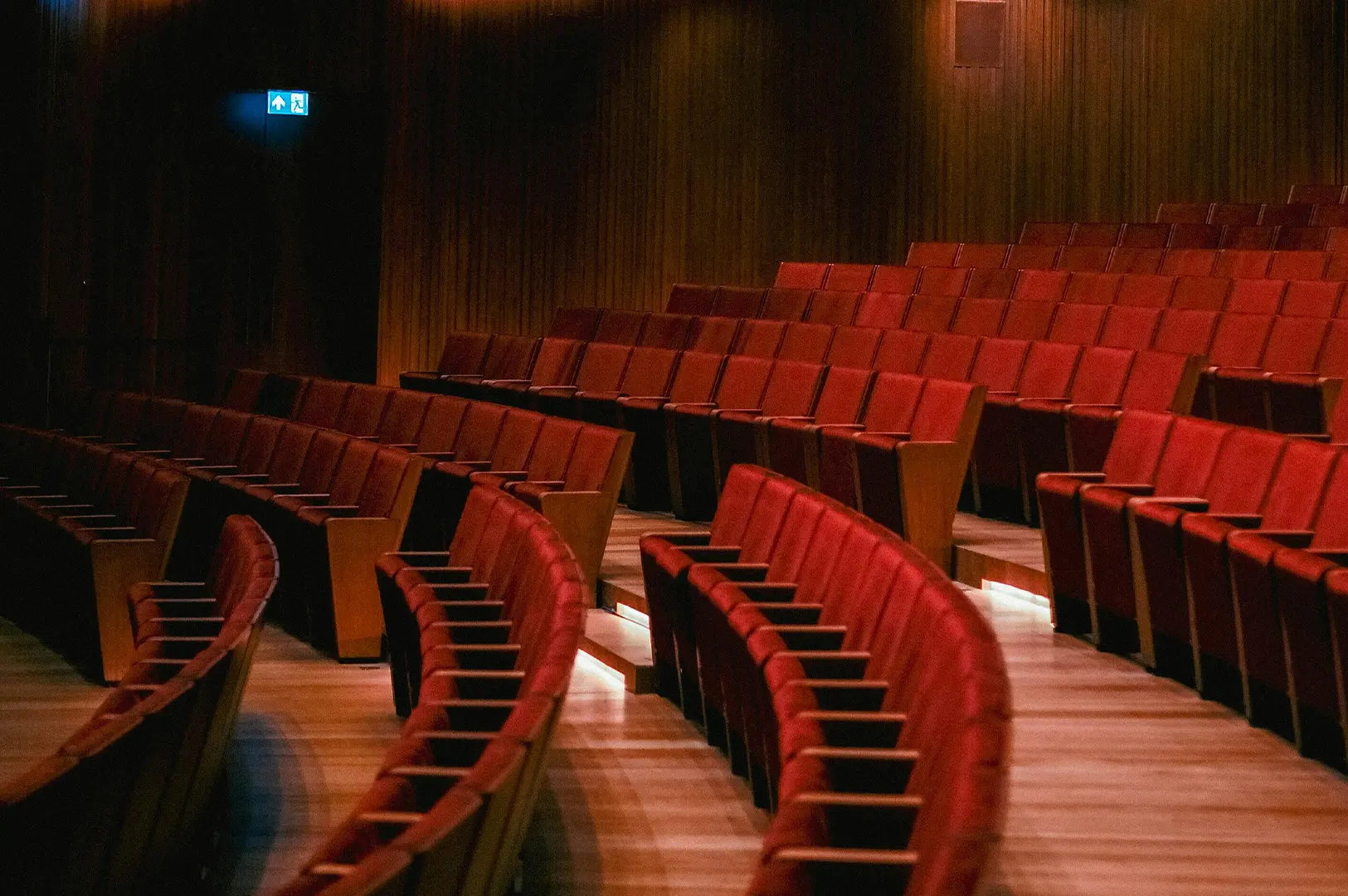
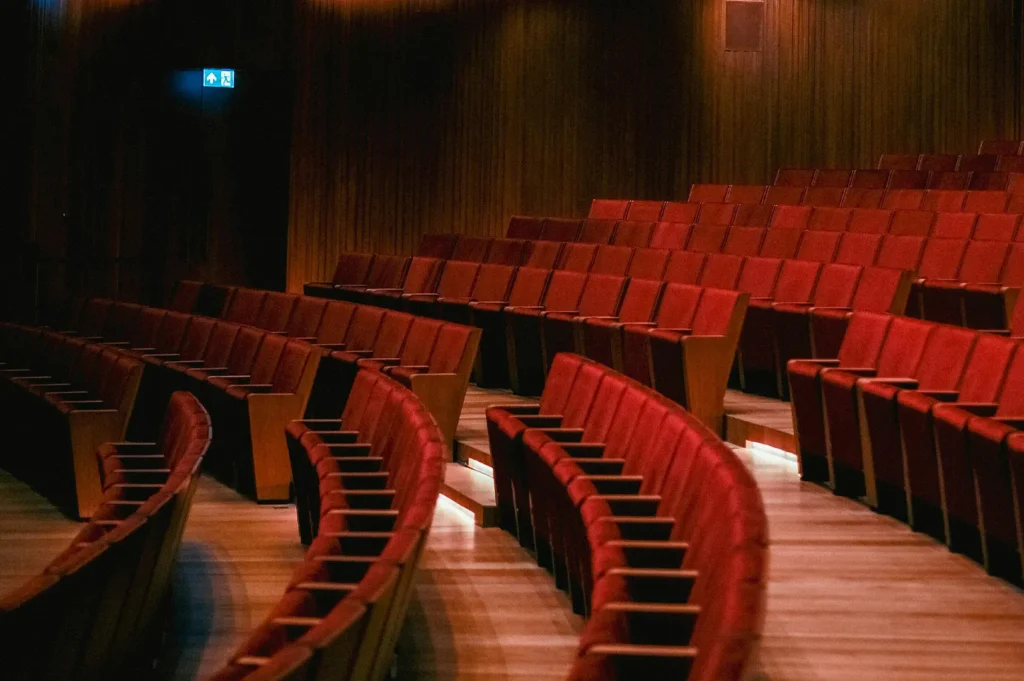
A theater before a performance. A room lined with fabric and wood. The difference is immediate. Sound does not travel far. It stays close, contained within the space.
This changes how you photograph. The frame becomes quieter, more attentive to detail. The absence of echo draws attention inward, allowing smaller gestures to carry more weight. It becomes a quiet shaped by absorption, rather than emptiness.
The Subject Within the Space
When a person enters, everything shifts.
A space that once felt expansive becomes anchored. The echo does not disappear, but it begins to relate to something human. A figure sitting, standing, or moving alters how the environment is perceived.
In these moments, the photograph becomes about more than structure. It becomes about the relationship between presence and environment. The subject is no longer separate from the space, but part of how it is experienced.
The Silent Dialogue of Space
Every photograph carries more than what is visible. It becomes a translation between what is seen and what is felt.
You begin to notice patterns in how spaces behave:
- Hard surfaces return sound quickly
- Open spaces stretch it across distance
- Soft materials absorb and contain it
These are not just physical properties. They shape how a place feels over time, even when the scene looks still. In the same way that the weight of shadow can change the mood of a building, these sonic signatures shape the atmosphere of the built world.
Tuning the Frame
Technical decisions begin to shift.
You adjust not to control the image, but to respond to the space. A slower shutter mirrors the rhythm of the environment, while a wider aperture isolates what feels close within a larger field.
These choices are subtle, but they carry intention. Photography becomes less about precision and more about responding to the pace of the environment.
The Final Resonance
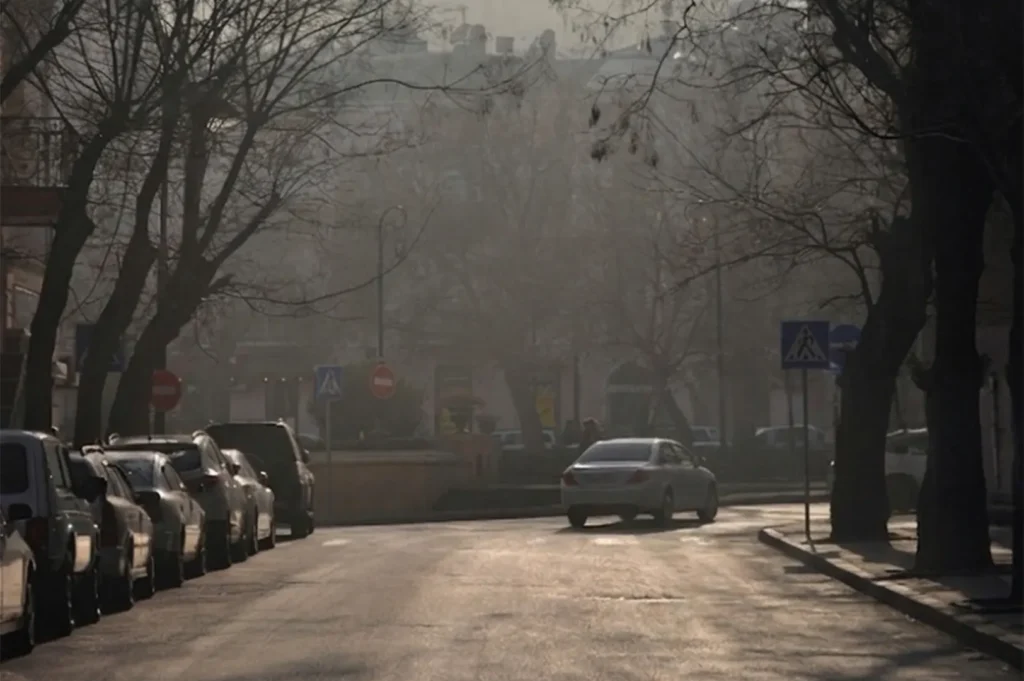
Long after you leave, something stays with you.
Not the exact sound, but the memory of how it moved through the space. The way it shaped your attention. The way it changed what you noticed.
Later, when you return to the photograph, you recognize that feeling again. Not just the structure, but the resonance inside it. The image becomes a trace of something that cannot be fully held.
And that lingering quality is not only about sound. It is about space itself. Across different places and different materials, the city keeps speaking, even when everything looks still.
If you want to explore how spaces shape feeling through light, thresholds, and stillness, you can read more.