Whispers of Ancient Forests: Conversations with Centenarian Trees
To step into an old-growth forest is to enter a conversation that began long before you were born. It is a dialogue spoken not in words, but in the language of light, shadow, and immense, silent presence. This photographic journey, “Whispers of Ancient Forests,” is an attempt to listen to that conversation. It explores the subtle ways ancient, centenarian trees communicate their stories and the profound emotional responses they evoke in those who seek connection with a timescale far grander than our own.
The Language of Bark and Burl
The story of an ancient tree is written on its skin. The bark is a living chronicle, a deeply grooved map of droughts, fires, and centuries of slow, patient growth. A massive burl on the side of a trunk is a scar from an ancient injury, a point of trauma that the tree has enveloped and turned into a feature of complex beauty. To photograph these details is to read the tree’s autobiography. It requires getting close, seeing the intricate ecosystems of moss and lichen that thrive in the crevices, and appreciating the rugged, sculptural quality of the wood. The camera becomes a tool for translating this tactile history into a visual story.
A Cathedral of Light
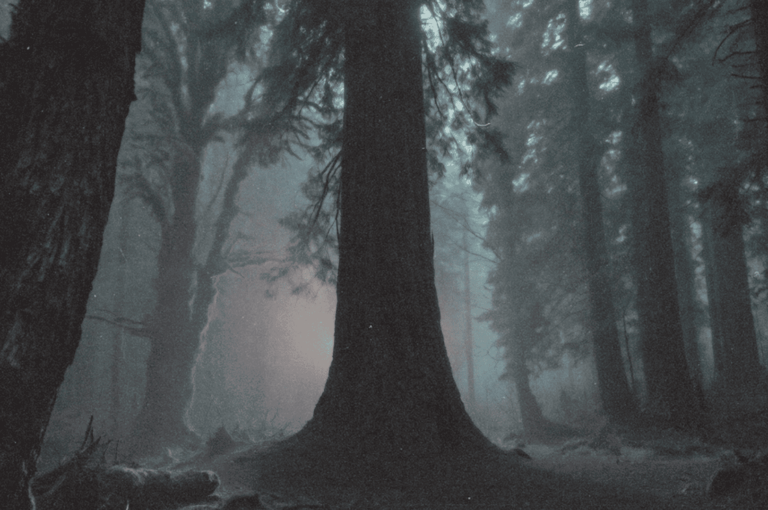
The canopy of an old-growth forest creates its own unique atmosphere. It is a living cathedral, where light filters down in shifting, ethereal beams. This dappled, sacred light illuminates patches of the forest floor, highlighting ferns and fallen leaves in a way that feels intentional and sacred. Capturing this light is a study in patience. It’s about waiting for the moment when a sunbeam pierces the canopy and transforms the space, creating a feeling of reverence and awe. The way the light moves and changes is the forest breathing, a slow, silent rhythm that governs the mood of the entire ecosystem. This interplay of light and nature has long been an inspiration for artists, a theme explored in depth by painters of the Hudson River School, whose works can be seen at museums like the Metropolitan Museum of Art.
Feeling the Immense Timescale
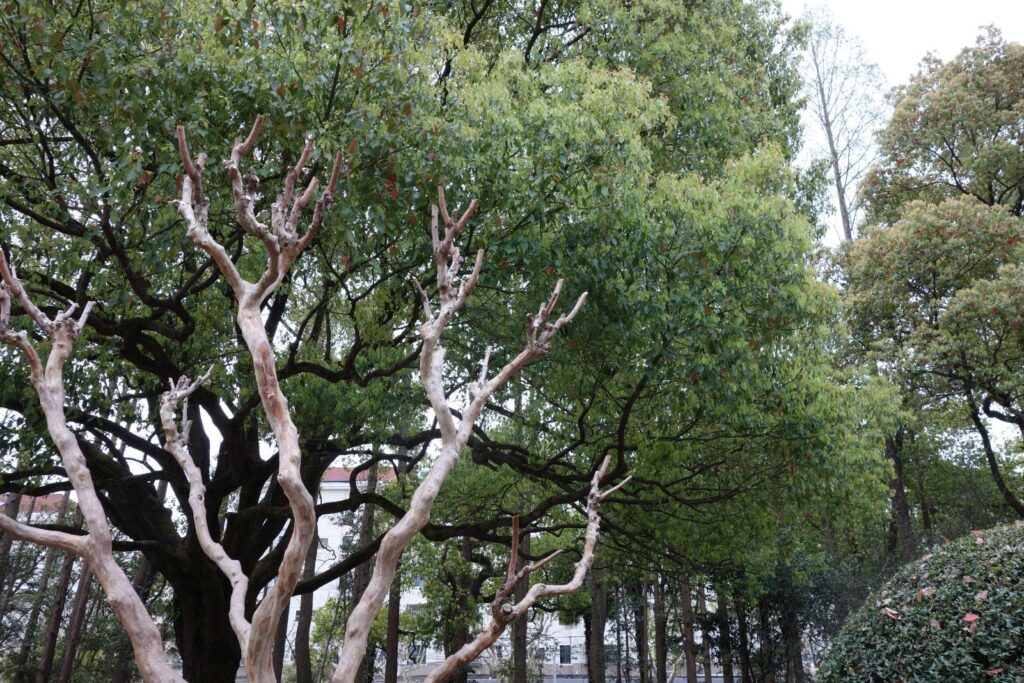
Standing at the base of a tree that has lived for 500 or 1,000 years is a humbling experience. It fundamentally alters your perception of time. Your own life, with all its urgent concerns, feels fleeting and small in comparison. This is the tree’s greatest lesson: a profound sense of perspective. Photographing this feeling is a challenge. It often involves placing a human figure in the frame, not as the subject, but as a point of scale, a tiny silhouette against a massive, indifferent trunk. The image isn’t about the person; it’s about the relationship between our brief existence and the tree’s deep, geological time. This connection between humanity and the vastness of nature is a key theme in environmental philosophy and writing, found in the works of authors celebrated by organizations like the Schumacher Center for a New Economics.
The Forest Floor: A Record of Life and Decay
The ground of an ancient forest is as alive as its canopy. It is a soft, deep carpet of fallen needles, decaying leaves, and “nurse logs”—fallen giants that become fertile ground for new life. This cycle of life, death, and regeneration is palpable. To photograph the forest floor is to document this beautiful, necessary decay. It’s about capturing the vibrant green shoots emerging from a rotting log or the intricate network of fungi spreading across the damp earth. It is a visual reminder that in nature, an end is always a new beginning.
The Silent Dialogue
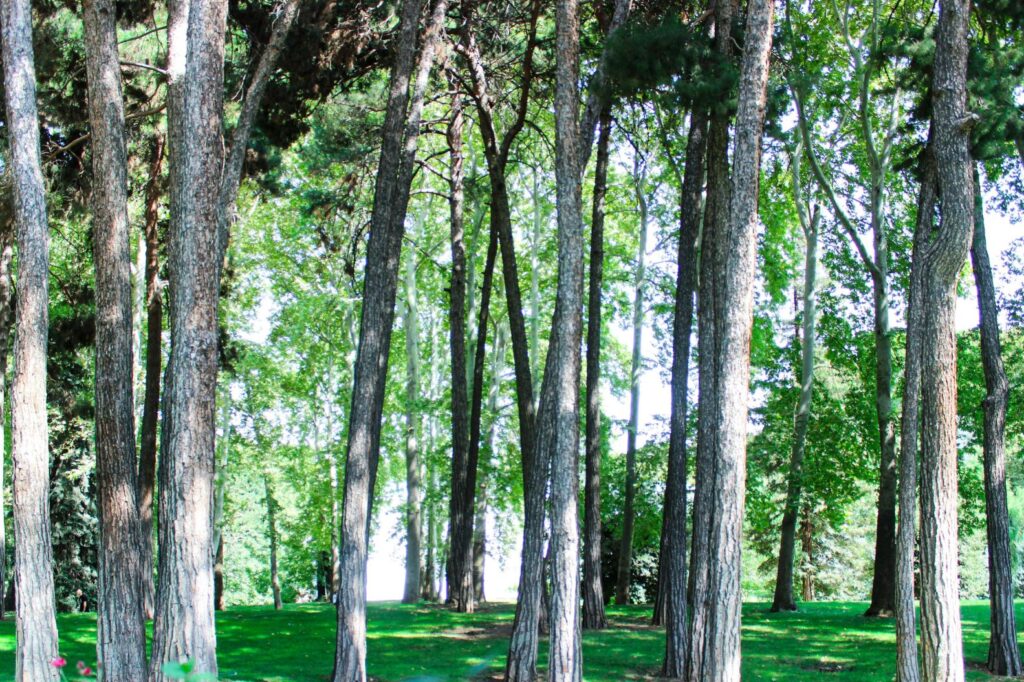
The “conversation” with an ancient tree is an internal one. You bring your own thoughts, your own quiet sorrows and joys, into its presence. The tree, in its immense stillness, doesn’t offer answers. Instead, it offers a space to simply be. It absorbs your emotional energy without judgment. Many people speak of feeling a sense of peace or of being “held” by the presence of these old trees. My goal as a photographer is to capture this invisible, therapeutic exchange. It might be a shot of a person with their hand resting gently on the bark, their posture relaxed, their face turned away from the camera. The image implies a connection, a moment of quiet communion between two living beings.
An Invitation to Listen
This photographic series is not just a documentation of old trees. It is an invitation to slow down, to step into these ancient places, and to listen. It is a reminder that there is a deep wisdom in the natural world that speaks in a language older than our own. These trees are not just a resource; they are our elders. They are living monuments to resilience, patience, and the profound, interconnected web of life. The work of photographers who focus on conservation and the environment, often featured by platforms like the International League of Conservation Photographers, continually reminds us of this vital connection. By learning to see them, to really see them, we can perhaps learn to better understand our own place within it all.
If you’d like to explore this way of seeing further, read Tidal Intimacies: A Year Communing with a Single Shore. For a deeper reflection on landscape, memory, and renewal, continue with Healing Landscapes: Photographing Places of Personal Recovery.